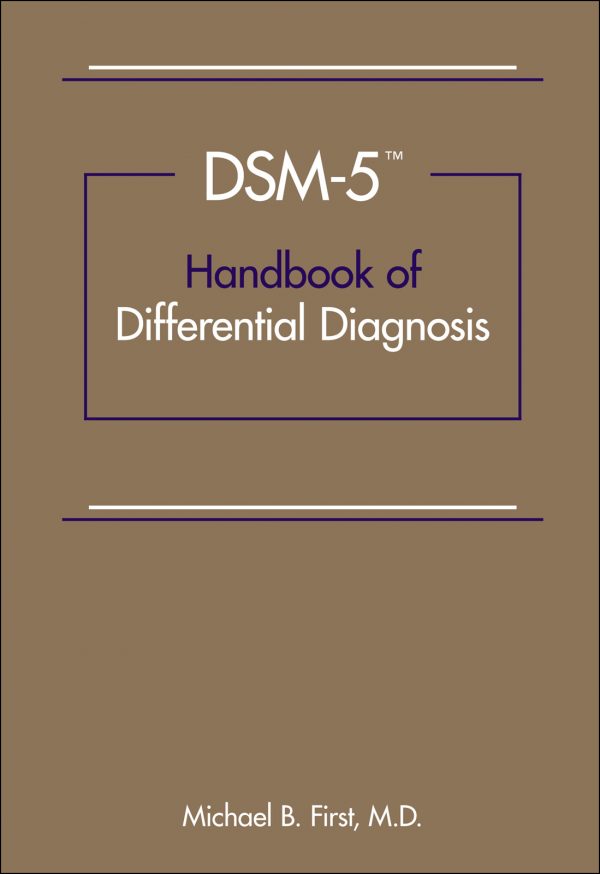

The DSM-5® Handbook of Differential Diagnosis is the preeminent guide to differential diagnosis for both clinicians and students learning psychiatric diagnosis. Based closely on the Diagnostic and Statistical Manual of Mental Disorders, Fifth Edition, it offers a rich selection of perspectives in an easy-to-use format. The author, an expert on psychiatric diagnosis and assessment, recognizes that psychological distress cannot be reduced to a rubric. The clinician must have empathy, listening skills, the ability to identify symptoms and contextualize them, and a familiarity with the body of knowledge represented by DSM-5®. The handbook brings these critical skills together in a well-written, accessible, and reader-friendly volume that is grounded in the latest research and standard of practice.
The handbook offers an assortment of approaches to differential diagnosis, and a number of features designed to benefit clinicians in the exam room, including:
A six-step framework for diagnosing patients that proceeds from determining if the symptom is real to establishing the boundary between disorder and normality, with intermediary steps to rule out substance etiology and medical conditions, as well as to determine the primary disorder and to differentiate adjustment disorders from other mental disorders. Twenty-nine symptom-oriented decision trees that provide detailed decision points to facilitate the process of generating the differential diagnosis based on the presenting symptoms and eliminate formulating premature conclusions. Sixty-six differential diagnosis tables, one for each of the most important DSM-5® disorders, cross-referenced with the terminal branches of the decision trees presented in the handbook to provide a head-to-head comparison of each disorder, highlighting similarities and differences. The DSM-5® classification, to facilitate coding and to provide an overview of all of the DSM-5® diagnoses that must be considered in formulating a differential diagnosis. Alphabetical indexes of the decision trees and differential diagnosis tables to help readers readily locate desired material.
DSM-5® Handbook of Differential Diagnosis provides a comprehensive overview of the process of diagnosing DSM-5® disorders while serving as a reference guide to assist in the differential diagnosis of individual patients. The handbook is an invaluable addition to the DSM-5® collection and an important contribution to the mental health profession.
Additional ISBNs: 9781585624621, 1585624624, 9781585629985, 1585629987


Civil Drafting Technology
An Exploration of Christian Theology
A Popular Survey of the New Testament
A Theology of Christian Counseling
An Introduction to Biblical Ethics
A Code of Jewish Ethics: Volume 1
Growing a Sustainable City?
21 Laws of Leadership in the Bible
Government and Politics in the Lone Star State
4 Chair Discipling: Growing a Movement of Disciple-Makers
30 Life Principles Bible Study
Acts of Faith
An Historical Introduction to American Education
Athenian Democracy: A Sourcebook
Black Elk Speaks
Brazil, 1964-1985: The Military Regimes of Latin America in the Cold War
Caffaro, Genoa and the Twelfth-Century Crusades
Art Therapy and the Neuroscience of Relationships, Creativity, and Resiliency: Skills and Practices (Norton Series on Interpersonal Neurobiology)
An Indigenous Peoples' History of the United States
Beyond the Vanguard
A Medieval Omnibus
Bloody Bill Anderson
An Imam in Paris
Community-Based Participatory Research
Bad Girls of the Bible
A Comprehensive Guide to Budgeting for Health Care Managers 
Review DSM-5 Handbook of Differential Diagnosis
There are no reviews yet.