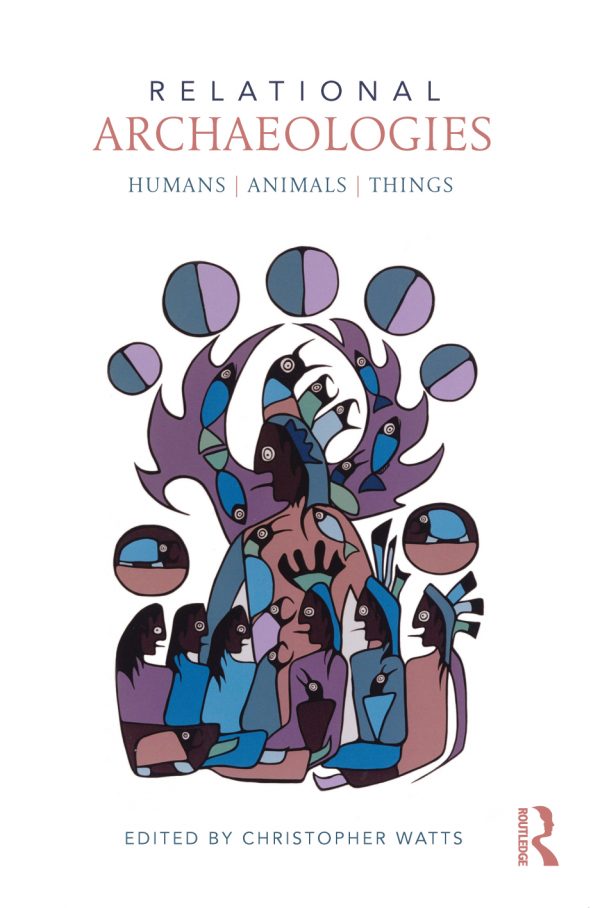

Many of us accept as uncontroversial the belief that the world is comprised of detached and disparate products, all of which are reducible to certain substances. Of those things that are alive, we acknowledge that some have agency while others, such as humans, have more advanced qualities such as consciousness, reason and intentionality. So deeply-seated is this metaphysical belief, along with the related distinctions we draw between subject/object, mind/body and nature/culture that many of us tacitly assume past groups approached and apprehended the world in a similar fashion. Relational Archaeologies questions how such a view of human beings, other-than-human creatures and things affects our reconstruction of past beliefs and practices. It proceeds from the position that, in many cases, past societies understood their place in the world as positional rather than categorical, as persons bound up in reticular arrangements with similar and not so similar forms regardless of their substantive qualities. Relational Archaeologies explores this idea by emphasizing how humans, animals and things come to exist by virtue of the dynamic and fluid processes of connection and transaction. In highlighting various counter-Modern notions of what it means to be and how these can be teased apart using archaeological materials, contributors provide a range of approaches from primarily theoretical/historicized treatments of the topic to practical applications or case studies from the Americas, the UK, Europe, Asia and Australia.
Additional ISBNs:
9780415525329, 0415525322, 9781135903190, 1135903190


Last Chance in Texas
Inventing the Future
Becoming an Academic Writer: 50 Exercises for Paced, Productive, and Powerful Writing
Owls and Other Fantasies
Sex at Dawn
Racial and Ethnic Groups
Leaving Prostitution
Social Psychology
Adolescent Literacy in the Era of the Common Core
Learning to Be Old
Midcentury Modern Art in Texas
Spreadable Media
Principles of Archaeology (Second Edition)
Qualitative Research Design
Multilevel Modeling in Plain Language
American Corrections
An Introduction to Fully Integrated Mixed Methods Research
Barracoon
Screenwriting
Key Ideas in Criminology and Criminal Justice
Made in Madagascar
American Corrections: Theory, Research, Policy, and Practice
Needs Assessment Phase I
Silencing Gender, Age, Ethnicity and Cultural Biases in Leadership
Restoring Justice
Law, Culture, and Africana Studies
A Primer on Communication and Communicative Disorders
An Introduction to Popular Culture in the US 
Review Relational Archaeologies
There are no reviews yet.