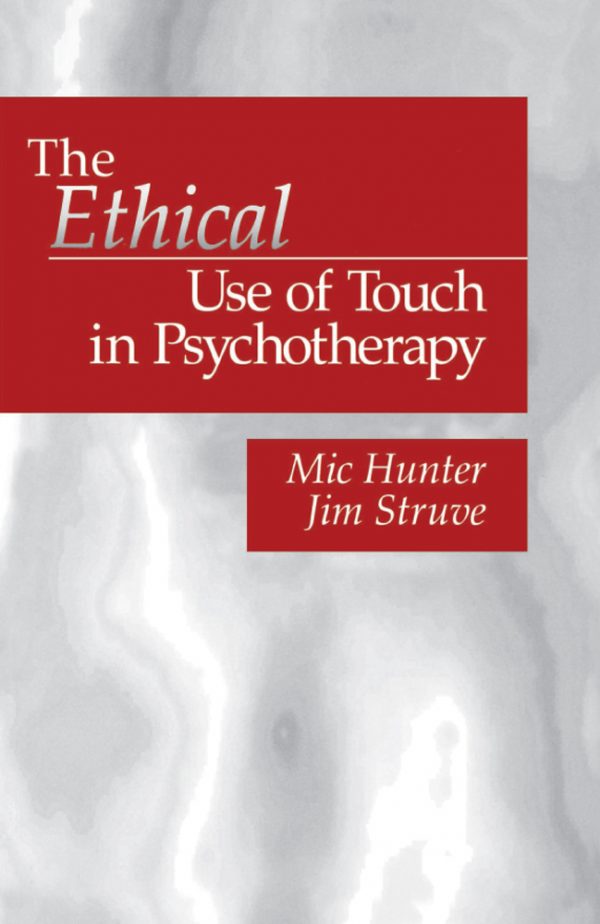

Is the bias against touch in psychotherapy justified? Is ethical touch an oxymoron? Can the recovery process be complete without healing touch? Mental health professionals are entrusted with the awesome responsibility of providing appropriate treatment for clients in a safe environment that nurtures trust, a necessary ingredient for optimum movement through the therapeutic process. Though treatment approaches vary, most modalities are verbally based and, in theory, exclude physical contact. Fearing that any form of touch would likely lead to sexual feelings or interaction, clinicians tend to shy away from the topic. In this book, however, Mic Hunter and Jim Struve skilfully demonstrate that touch – a most basic human need – is intrinsic to
Additional ISBNs: 9780761903611, 0761903615, 9781506320717, 1506320716


A Listener's Guide to Free Improvisation
Japanese Soul Cooking
50 Essays: A Portable Anthology (High School Edition): for the AP English Language Course
Culinary Nutrition Principles and Applications
Hello, My Name Is Ice Cream
Several Short Sentences About Writing
Digital Paper: A Manual for Research and Writing with Library and Internet Materials
The ABCs of How We Learn: 26 Scientifically Proven Approaches, How They Work, and When to Use Them
1,001 Facts that Will Scare the S#*t Out of You
Bring It!
Cooking Apicius
Liquid Intelligence: The Art and Science of the Perfect Cocktail
Dr. Neal Barnard's Cookbook for Reversing Diabetes
Baking All Year Round
Lose Weight with Your Instant Pot
How To Brew
Art Therapy and the Neuroscience of Relationships, Creativity, and Resiliency: Skills and Practices (Norton Series on Interpersonal Neurobiology)
Authentic Movement: Moving the Body, Moving the Self, Being Moved
An Introduction to Psychological Assessment and Psychometrics 
Review The Ethical Use of Touch in Psychotherapy
There are no reviews yet.