

-
×
 A Listener's Guide to Free Improvisation
1 × $3.75
A Listener's Guide to Free Improvisation
1 × $3.75
 A Listener's Guide to Free Improvisation
 Subtotal: $3.75
$9.25
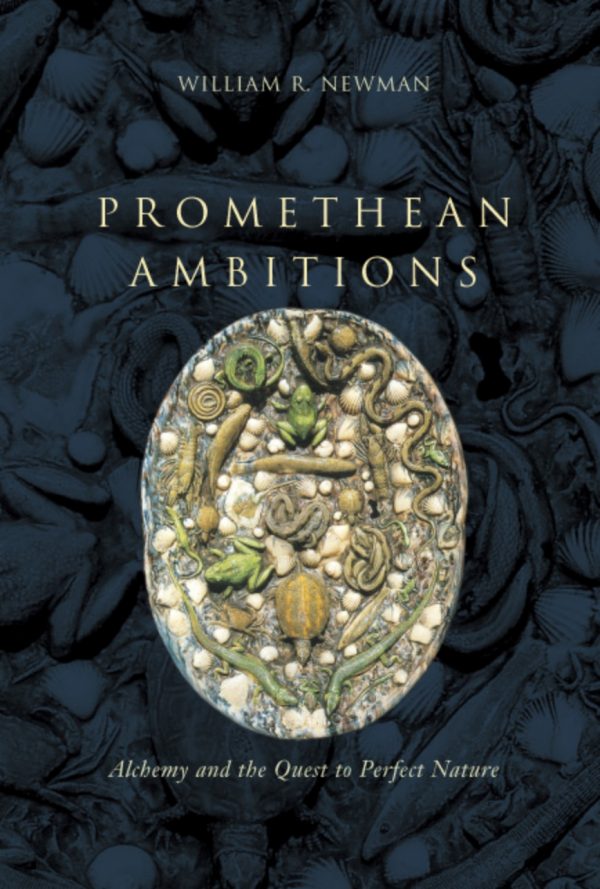
In an age when the nature of reality is complicated daily by advances in bioengineering, cloning, and artificial intelligence, it is easy to forget that the ever-evolving boundary between nature and technology has long been a source of ethical and scientific concern: modern anxieties about the possibility of artificial life and the dangers of tinkering with nature more generally were shared by opponents of alchemy long before genetic science delivered us a cloned sheep named Dolly. In Promethean Ambitions, William R. Newman ambitiously uses alchemy to investigate the thinning boundary between the natural and the artificial. Focusing primarily on the period between 1200 and 1700, Newman examines the labors of pioneering alchemists and the impassioned—and often negative—responses to their efforts. By the thirteenth century, Newman argues, alchemy had become a benchmark for determining the abilities of both men and demons, representing the epitome of creative power in the natural world. Newman frames the art-nature debate by contrasting the supposed transmutational power of alchemy with the merely representational abilities of the pictorial and plastic arts—a dispute which found artists such as Leonardo da Vinci and Bernard Palissy attacking alchemy as an irreligious fraud. The later assertion by the Paracelsian school that one could make an artificial human being—the homunculus—led to further disparagement of alchemy, but as Newman shows, the immense power over nature promised by the field contributed directly to the technological apologetics of Francis Bacon and his followers. By the mid-seventeenth century, the famous “father of modern chemistry,” Robert Boyle, was employing the arguments of medieval alchemists to support the identity of naturally occurring substances with those manufactured by “chymical” means. In using history to highlight the art-nature debate, Newman here shows that alchemy was not an unformed and capricious precursor to chemistry; it was an art founded on coherent philosophical and empirical principles, with vocal supporters and even louder critics, that attracted individuals of first-rate intellect. The historical relationship that Newman charts between human creation and nature has innumerable implications today, and he ably links contemporary issues to alchemical debates on the natural versus the artificial.
Additional ISBNs: 9780226575247, 0226575241, 9780226577135, 0226577139
No comments yet

General


Computers


General


General

Review Promethean Ambitions: 1st Edition Alchemy and the Quest to Perfect Nature
There are no reviews yet.